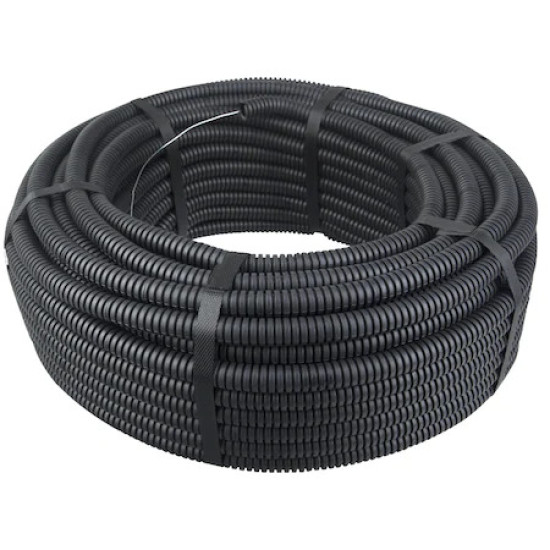
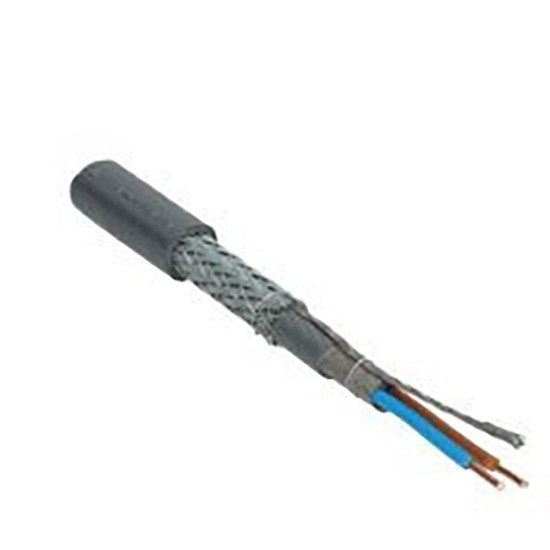
Copex is that ribbed hose, with rings, into which cables are pulled so that they are protected. The corrugated wall gives it two qualities at the same time: it bends easily, so it follows corners and obstacles without additional parts, and it resists crushing much better than a smooth tube with the same wall thickness. The material is self-extinguishing PVC, meaning it does not sustain burning: if the flame disappears, the conduit goes out by itself, instead of carrying the fire further along the run.
The 32 mm diameter is the right size for bundles of cables or for runs where you want spare room, so that you can pull another cable later without breaking the wall open again. The 50 m roll covers long runs without joints, which means fewer weak points. It is installed exposed, fixed from place to place with clips or ties, or buried in plaster and screed, and the cables are pulled through it with a draw wire. Fill it reasonably, not to the brim: if it is too full, the cables are hard to pull and the heat no longer has anywhere to escape. A detail that matters a lot in photovoltaics: ordinary PVC copex is not made to stay for years on end in the sun, so it is used indoors, in the attic, in the stairwell, in ducts or buried, and for the sections on the roof and facade UV-resistant versions or metal conduit are chosen.
Flexible ribbed conduit of self-extinguishing PVC for the protection and management of cables, nominal outer diameter 32 mm, supplied in a 50 m roll, reference standard EN 61386-22 for flexible conduit systems in electrical installations. Exposed mounting, on clips or ties, or buried in plaster and screed. The self-extinguishing property is especially relevant on the DC side of a photovoltaic installation, where the cable remains at string voltage throughout the day, and an insulation fault is not interrupted automatically as in an alternating current circuit. It is not intended for direct and prolonged exposure to ultraviolet radiation.
Who it suits
Suitable for indoor runs with several cables in parallel or where you want spare room for later pulls, in photovoltaic and household electrical installations.
Terms explained
- Self-extinguishing (flame-retardant): The material does not keep the flame alight: if the source of fire disappears, it goes out by itself and does not propagate the burning.
- Fill ratio: How full the conduit is with cables; left with spare room, the cables are pulled easily and the heat is evacuated.
- UV radiation: The part of sunlight that degrades plastic over time, making it brittle; that is why ordinary PVC does not stay permanently outdoors.
Technical specifications
| Type | Tub riflat flexibil (copex) pentru protectia si managementul cablurilor |
|---|
| Material | PVC autostingator (ignifug), nu intretine arderea |
|---|
| Nominal outer diameter | 32 mm |
|---|
| Roll length | 50 m |
|---|
| Mounting method | Aparent, pe cleme sau coliere, ori ingropat in tencuiala si sapa |
|---|
| Reference standard | EN 61386-22 - sisteme flexibile de tuburi pentru instalatii electrice |
|---|
| UV resistance | Nu este destinat expunerii directe prelungite la soare; pentru exterior se folosesc variante rezistente la UV |
|---|
Recommended applications
- Protection of the DC string cables on the indoor run from the panels towards the inverter
- Routing of cables through the attic, ducts, stairwell or through walls
- Protection of the AC circuits of the photovoltaic installation and of the communication cables
- Runs buried in plaster or screed in building electrical installations
Technical details
Generic product — standard specifications
The copex conduit is a flexible ribbed pipe of self-extinguishing PVC, used as a mechanical protection system for cables. The corrugated profile gives it high flexibility in bending, so that the run can follow bends and obstacles without additional fittings, and at the same time gives it a much better crush resistance than a smooth tube with the same wall. The nominal diameter of 32 mm is the usual size for bundles of cables or for runs where spare room for later pulls is wanted.
The self-extinguishing material, marketed as flame-retardant, means that the conduit does not sustain burning after the removal of the flame source. This property is required in building electrical installations and is especially relevant on the DC runs of a photovoltaic installation, where the string voltage is maintained on the cable all day and an insulation fault is not interrupted automatically, as in the case of an alternating current circuit.
It is installed exposed, fixed with ties or conduit clips at regular intervals, or buried in plaster and screed. The cables are pulled with a draw wire, and the fill ratio is kept reasonable, to allow pulling and not to block the dissipation of heat. The 50 m roll covers complete runs without joints over long sections.
An important technical note for photovoltaics: standard PVC copex is not intended for direct and prolonged exposure to ultraviolet radiation. For the outdoor sections on the roof or facade, UV-resistant versions, metal conduit or protected runs are used; ordinary copex is recommended for the indoor sections, in the attic, in the stairwell, in ducts or buried.