Deye
Deye SUN-EVSE11K01-EU-AC
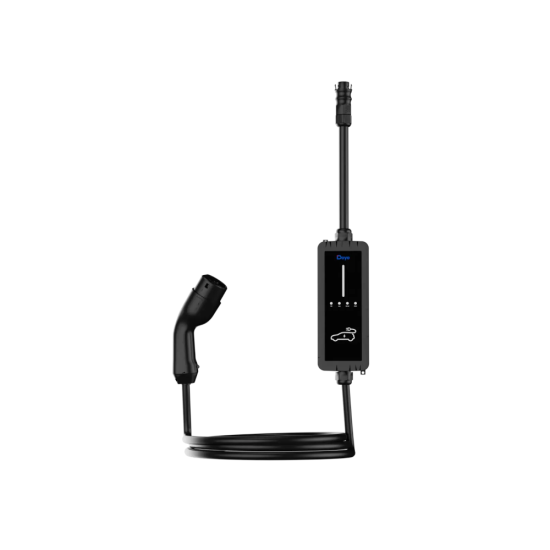
You charge your electric car at home, preferably from the panels' surplus: 11 kW three-phase, own 4.2 m cable attached, weather resistant (IP66).
11 kW
3.981,00 RON incl. VATexcl. VAT: 3.290,08 RON
It charges the car with the surplus from the panels, through the PV Power Preferred mode: adjustable power 1.4-22 kW, only 3.1 kg, with residual current protection already integrated.
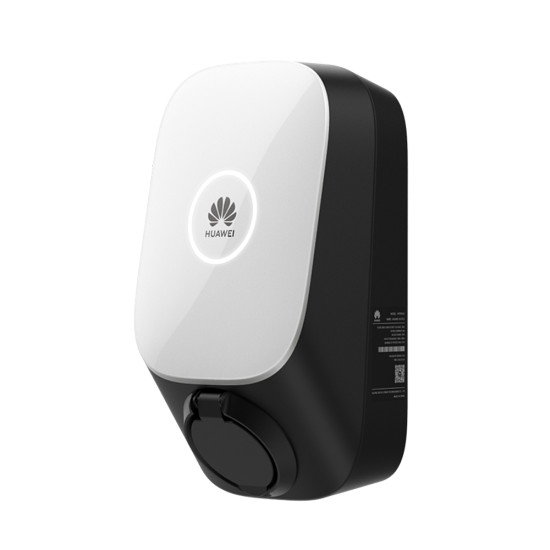
It is a charging station for electric cars that is mounted on the wall and connected to the house's installation. Its particularity is that it knows how to use the energy produced by the photovoltaic panels as a priority: instead of sending the surplus into the grid, it puts it into the car's battery. It can also work on a schedule, that is start by itself at night, when energy is cheaper, or guarantee a charge level by the time you leave home. The box is small and light, about the size of a laptop bag.
The power is adjusted continuously between 1.4 and 22 kW, so the station can charge slowly, only from what the panels give, or at maximum when speed is needed; as a guide, at 22 kW about 22 kWh go in within one hour, if the car accepts this power on alternating current. It weighs 3.1 kg and measures 335 x 180 x 145 mm, so wall mounting is simple and requires no special brackets. It withstands between -35 and +50 °C, with an IP54 protection degree and IK10 impact resistance, so it can also stay outdoors. A practical advantage at installation: the residual current protection is already in the device, so a separate type B residual current device no longer has to be bought for the distribution board, which reduces the cost of the work. The session status is visible on a WRGB LED ring and in the app, and access can be made with an RFID card, from the app or by Bluetooth.
Rated voltage 400 V ±20% three-phase or 230 V ±20% single-phase, 50/60 Hz ±1 Hz, configurable current 6-32 A, Type 2 socket, supply cable cross-section up to 10 mm2, TN and TT networks. Integrated residual current protection: type A RCD (30 mA) plus 6 mA direct current detection, overcurrent protection according to IEC 61851-1 and overtemperature protection. Communication Wi-Fi or Ethernet, with Modbus TCP and OCPP 1.6; RFID ISO-14443-A authentication, app or Bluetooth. Operating modes: Normal Charge, Scheduled Charge, PV Power Preferred and Next Trip; compliance with EN IEC 61851-1, EN IEC 61851-21-2, EN 62311, EN 50665/50364 and RoHS.
Suitable for a house with a Huawei FusionSolar photovoltaic system, which wants to charge the car from its own surplus instead of sending it into the grid.
| Charging power | 1,4...22 kW, configurabila |
|---|---|
| Rated voltage | 400 V ±20% (trifazat) / 230 V ±20% (monofazat) |
| Rated current | 6...32 A, configurabil |
| Frequency | 50/60 Hz ±1 Hz |
| Vehicle connection | priza Type 2 |
| Supply cable cross-section | pana la 10 mm2 |
| Network types | TN, TT |
| Residual current protection | tip A (30 mA) + 6 mA c.c. integrat |
| Overcurrent protection | conform IEC 61851-1 |
| Protection degree | IP54 |
| Impact resistance | IK10 |
| Operating temperature | -35...+50 °C |
| Dimensions (H x W x D) | 335 x 180 x 145 mm |
| Weight | 3,1 kg |
| Communication | Wi-Fi / Ethernet |
| Protocols | Modbus TCP, OCPP 1.6 |
| Authentication | RFID (ISO-14443-A), aplicatie, Bluetooth |
| Operating modes | Normal Charge / Scheduled Charge / PV Power Preferred / Next Trip |
| Status indicator | LED WRGB si aplicatie |
| Standards | EN IEC 61851-1, EN IEC 61851-21-2, EN 62311, EN 50665/50364, RoHS |
| Installation | pe perete |
Specifications confirmed from the manufacturer's datasheet
Huawei SCharger-22KT-S0 is the three-phase AC charging station of the FusionCharge range, designed for direct integration with Huawei FusionSolar photovoltaic systems. The charging power is continuously adjustable between 1.4 and 22 kW, with a rated voltage of 400 V ±20% on three phases or 230 V ±20% single-phase, frequency 50/60 Hz ±1 Hz and current configurable between 6 and 32 A. The vehicle is connected through a Type 2 socket, and the supply cable can have a cross-section of up to 10 mm2; TN and TT networks are supported.
Fault current protection is integrated in the device: type A RCD (30 mA) plus 6 mA direct current detection, which eliminates the need for a separate type B residual current device in the board and reduces the cost of the installation. To these are added overcurrent protection according to IEC 61851-1 and overtemperature protection. The enclosure has an IP54 protection degree and IK10 impact resistance, works in the -35...+50 °C range, measures 335 x 180 x 145 mm and weighs only 3.1 kg, so it is easily mounted on the wall.
Communication is through Wi-Fi or Ethernet, with Modbus TCP and OCPP 1.6 protocols for integration into charging networks. User authentication is possible through an RFID card (ISO-14443-A), the app or Bluetooth, and the session status is indicated by a WRGB LED ring and in the app. The station has four operating modes: Normal Charge (immediate charging), Scheduled Charge (scheduled over cheap time intervals), PV Power Preferred (priority charging from the photovoltaic surplus) and Next Trip (guaranteeing a charge level by a set time). The product complies with EN IEC 61851-1, EN IEC 61851-21-2, EN 62311, EN 50665/50364 and RoHS requirements.
You charge your electric car at home, preferably from the panels' surplus: 11 kW three-phase, own 4.2 m cable attached, weather resistant (IP66).
Charging station for the electric car on a single-phase connection: 3,6 kW, Type 2 socket, with charging from photovoltaic surplus and automatic current limiting.
Three-phase 11 kW station with Type 2 socket, screen and RFID card, which can charge from the panels' surplus. Weather resistant (IP65).
Wall station for charging your electric car at home, with its own 5 m cable always at hand: 22 kW three-phase, 32 A, start from the app, RFID card or directly on plugging in.