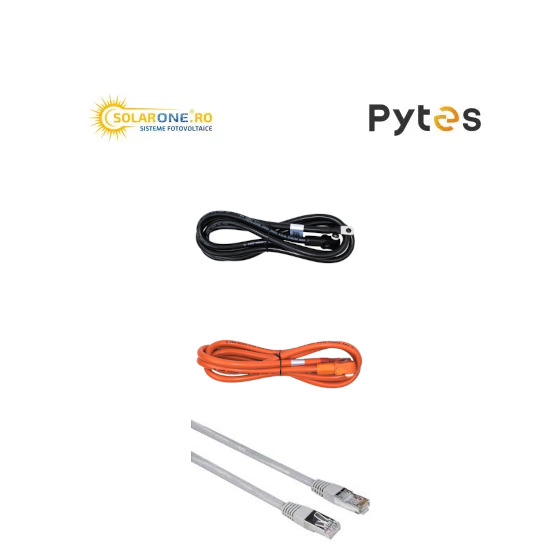
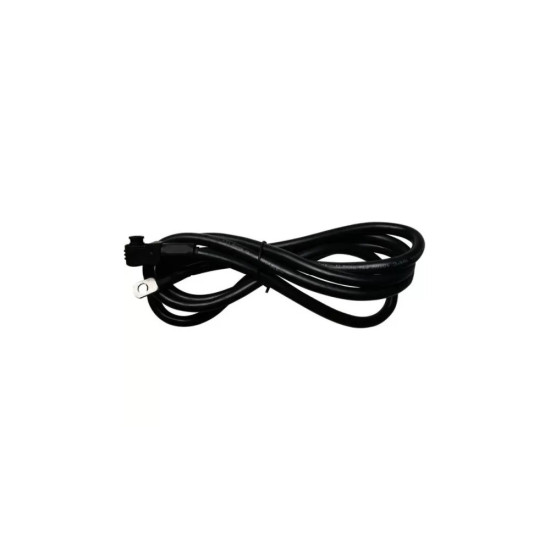
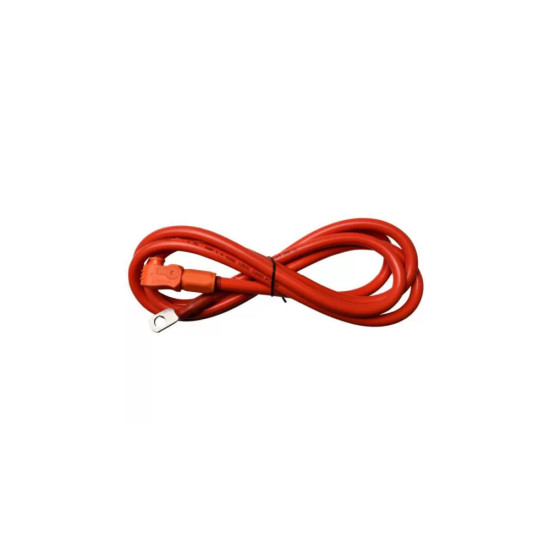
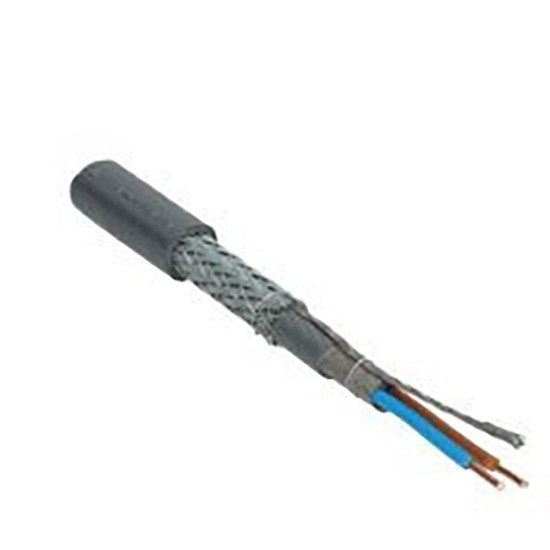
The battery and the inverter are connected through two thick cables, one on plus and one on minus, through which all the current between them flows. The kit contains this pair, cut to length and factory-terminated for the Pytes V5 battery. The two cables are marked with distinct colours, precisely so that the polarity cannot be reversed during installation.
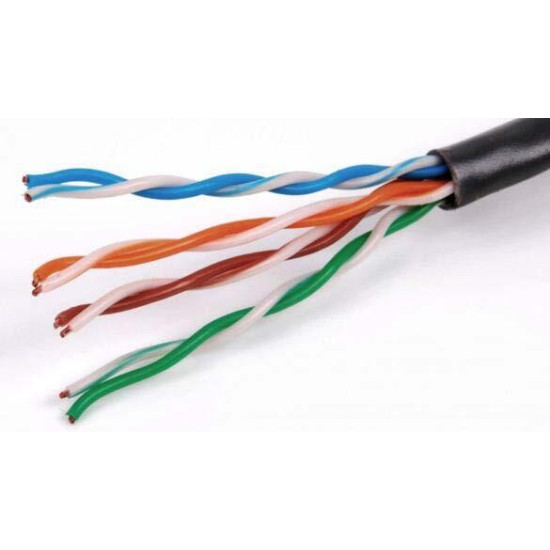
Each cable is about 2 m, a length calibrated for the usual situation in which the battery and the inverter sit in the same cabinet or on the same wall. The 25 mm² (4 AWG) cross section and the working current of up to about 120 A cover with margin the maximum continuous current of the V5 module, which is 100 A. The V5 battery is a LiFePO4 module of 51,2 V and 100 Ah, that is 5,12 kWh stored, with a cycle efficiency above 95% and over 6000 cycles at 90% depth of discharge; as a guide, at one full cycle per day that means over 16 years of use. The end towards the battery couples with a lock, without a torque wrench, and the one towards the inverter is fixed with an M8 bolt on the terminal, on the busbar or on the DC switch. The power cables do not carry information as well: communication between battery and inverter is done separately, through an RJ45 network cable.
Set of two prefabricated cables of about 2 m each, cross section 25 mm² (4 AWG), working current up to about 120 A. Amphenol Surlok Plus 8 mm terminal on the battery side, M8 ring lug on the inverter side. Compatible with Pytes V5: LiFePO4 51,2 V / 100 Ah / 5,12 kWh, voltage range 47,5-57,6 V, standard charge and discharge current 75 A, maximum continuous current 100 A, cycle efficiency above 95%, over 6000 cycles at 90% depth of discharge. Prefabricated cables eliminate on-site crimping and keep the contact resistance at low values, reducing terminal heating and voltage drop; communication is carried out separately, over RJ45, CAN or RS485.
Who it suits
Suitable for rack installations, in which the Pytes V5 battery and the 48 V hybrid inverter are placed in the same cabinet or on the same wall.
Terms explained
- Cross section 25 mm² (4 AWG): The thickness of the copper wire inside the cable; the larger it is, the less the cable heats up at high current.
- Maximum continuous current: The highest current the battery can give or receive indefinitely, without overheating.
- Depth of discharge (DoD): How much the battery is emptied on each cycle; 90% means nine tenths of the capacity are used.
Technical specifications
| Purpose | Baterie Pytes V5, legatura la invertor sau bara DC |
|---|
| Contents | 2 cabluri (pozitiv si negativ) |
|---|
| Length | cca. 2 m fiecare |
|---|
| Conductor cross section | 25 mm2 (4 AWG) |
|---|
| Current | pana la cca. 120 A |
|---|
| Battery side terminal | Amphenol Surlok Plus 8 mm |
|---|
| Inverter side terminal | Papuc inelar M8 |
|---|
| System voltage | 51,2 V DC nominal (47,5-57,6 V) |
|---|
| Compatible battery | Pytes V5, 100 Ah / 5,12 kWh LiFePO4, max. 100 A continuu |
|---|
Recommended applications
- Connecting the Pytes V5 battery to 48 V hybrid inverters
- Connecting V5 modules to the DC busbar in multi-battery configurations
- Rack installation for residential storage systems
- Replacing the power cables in Pytes systems already in service
Technical details
Series-level specifications — valid for the product family
The kit provides the power connection between the Pytes V5 battery module and the hybrid inverter or the DC busbar. The set contains two prefabricated cables, of about 2 m each, one for the positive pole and one for the negative pole, marked with distinct colours to prevent polarity reversal.
The conductor cross section is 25 mm2 (4 AWG), and the set is rated for a working current of up to about 120 A, which covers the maximum continuous charge and discharge current of the V5 module, of 100 A. The terminal on the battery side is of the Amphenol Surlok Plus 8 mm type, the connector used on the Pytes V5 terminals, which couples with a lock and does not require tightening with a torque wrench. The terminal on the inverter side is an M8 ring lug, for fixing on the inverter terminal, on the busbar or on the DC switch.
The Pytes V5 module is a LiFePO4 battery of 51,2 V and 100 Ah, respectively 5,12 kWh, with a voltage range of 47,5-57,6 V, a standard charge and discharge current of 75 A, a maximum continuous current of 100 A and a cycle efficiency above 95%. The declared service life exceeds 6000 cycles at 90% depth of discharge.
The length of 2 m is calibrated for the typical rack installation, in which the battery and the inverter are positioned in the same cabinet or on the same wall; the prefabricated cables eliminate the crimping carried out on site and keep the contact resistance at low values, which reduces terminal heating and voltage drop. Battery-inverter communication is done separately, through an RJ45 cable over CAN or RS485.