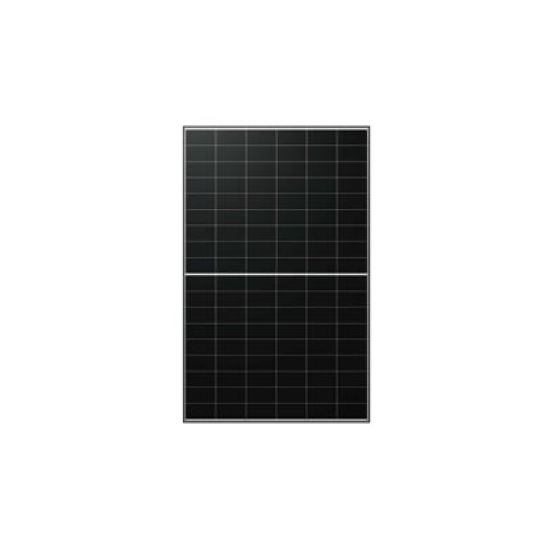
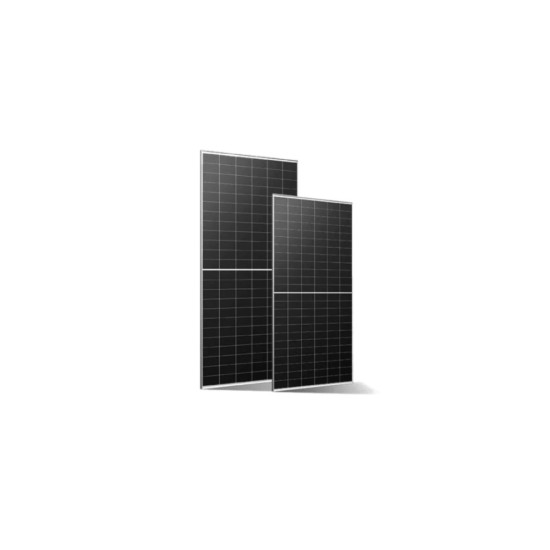
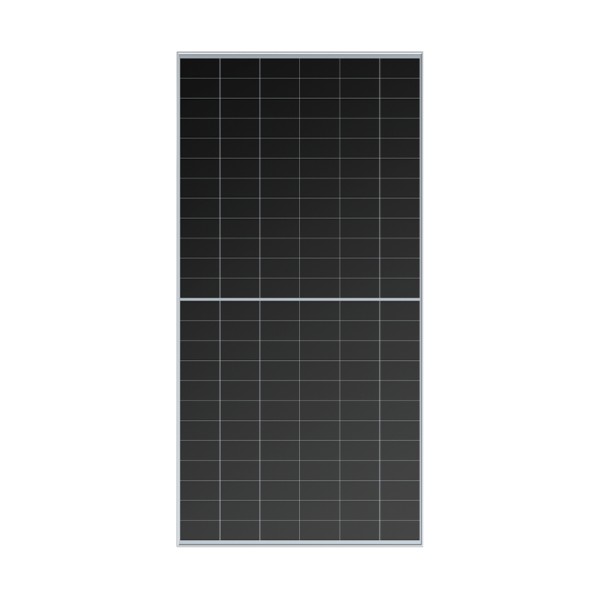
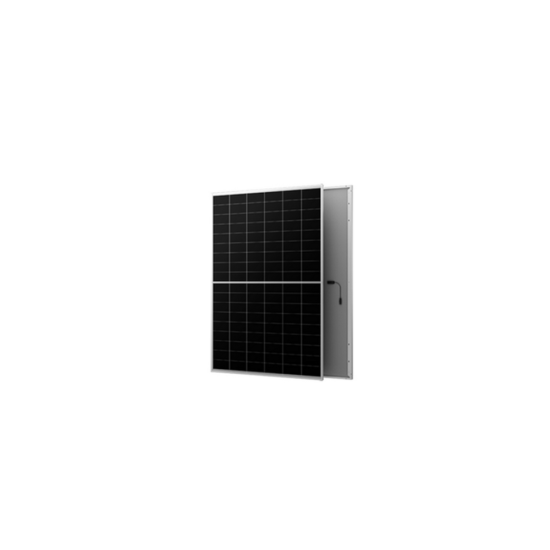
It is a panel from the LONGi Hi-MO X10 family, Scientist series, built on back-contact cells: all the electrical contacts are moved to the back of the cell, so the front does not have the usual metal grid. The surface remains free for light, which means more power from the same footprint. In practice, on the same spot on the roof you obtain more watts than with a classic panel. It is a choice for situations where space, not budget, is the limit.
With 535 W and an efficiency of 23.7% on a 1990 x 1134 mm format, the panel is among the densest variants commercially available at this size; 12 such modules mean 6.42 kWp on a roof of approximately 27 m2 of panel surface. The module weighs 25.0 kg, so it is mounted by two people, on standard structures. The very small voltage coefficient, -0.20 %/degree C, allows longer strings of panels without the risk that in winter, in frost, the voltage exceeds the inverter's limit. The warranty is 15 years on the product and 30 years linear on power, with a maximum of 1% degradation in the first year and 0.35% per year afterwards, that is around 88.8% of the power at 30 years.
At STC: 535 W, Vmp 37.01 V, Imp 14.46 A, Voc 44.78 V, Isc 15.15 A. HPBC 2.0 back-contact N-type cells, 120 cells, 3.2 mm front glass, anodised aluminium frame, 1990 x 1134 x 30 mm, 25.0 kg. Temperature coefficients -0.26 %/degree C (Pmax), -0.20 %/degree C (Voc), +0.05 %/degree C (Isc), NOCT 45 degrees C, maximum system voltage 1500 V DC, operating range -40...+85 degrees C. Design note: the public sources consulted for this product code do not uniformly confirm the existence of a bifacial gain (some databases list it as monofacial, others as bifacial); if the rear gain is taken into account in the yield calculation, the exact variant must be confirmed with the datasheet of the delivered batch.
Who it suits
Suitable for roofs with limited surface, where you want maximum power per square metre, and for installations with long strings of panels on a single MPPT.
Terms explained
- Module efficiency (23.7%): What part of the light falling on the panel is turned into electricity; the higher it is, the more watts you obtain from the same spot on the roof.
- STC: The standard laboratory conditions in which the panel's power is measured; in reality, the values vary with the sun and the temperature, which is why data at NOCT also exists.
- Maximum system voltage 1500 V DC: The limit up to which panels can be connected in series in a string, without exceeding the module's insulation.
Technical specifications
| Rated power (STC) | 535 W |
|---|
| Module efficiency | 23,7% |
|---|
| Vmp / Imp | 37,01 V / 14,46 A |
|---|
| Voc / Isc | 44,78 V / 15,15 A |
|---|
| Cell technology | HPBC 2.0 back-contact, N-type, 120 celule |
|---|
| Front glass | 3,2 mm |
|---|
| Frame | aluminiu anodizat |
|---|
| Dimensions | 1990 x 1134 x 30 mm |
|---|
| Weight | 25,0 kg |
|---|
| Maximum system voltage | 1500 V DC |
|---|
| Pmax temperature coefficient | -0,26 %/grad C |
|---|
| Voc temperature coefficient | -0,20 %/grad C |
|---|
| Isc temperature coefficient | +0,05 %/grad C |
|---|
| NOCT | 45 grade C |
|---|
| Operating temperature | -40 ... +85 grade C |
|---|
Recommended applications
- Residential and commercial systems with a maximum power density requirement
- Roofs with limited surface
- Installations with long strings thanks to the reduced voltage coefficient
- Hybrid systems with storage
Warranty
15 years product warranty and 30 years linear power warranty; max. 1% degradation in the first year, 0.35%/year afterwards, about 88.8% at 30 years
Technical details
Series-level specifications — valid for the product family
LR7-60HVH-535M is the 535 W bin of the LONGi Hi-MO X10 family (Scientist series), built on HPBC 2.0 cells - the back-contact architecture in which both electrical contacts are on the back of the cell. The absence of the metal grid on the front increases the useful surface and brings the module efficiency to 23.7%, one of the highest values commercially available in the 1990 x 1134 mm format.
At STC the module delivers 535 W, with Vmp 37.01 V, Imp 14.46 A, Voc 44.78 V and Isc 15.15 A. The temperature coefficients are -0.26 %/degree C for Pmax, -0.20 %/degree C for Voc and +0.05 %/degree C for Isc; the very small voltage coefficient allows longer strings without the risk of exceeding the inverter's maximum voltage in winter. NOCT is 45 degrees C, and the maximum system voltage 1500 V DC.
The module has 120 cells, 3.2 mm front glass, an anodised aluminium frame and a weight of 25.0 kg. Note: the public sources consulted for this product code do not uniformly confirm the existence of a bifacial gain (some databases list it as monofacial, others as bifacial); for projects in which the rear gain is taken into account, we recommend confirming the exact variant with the datasheet of the delivered batch.