Deye
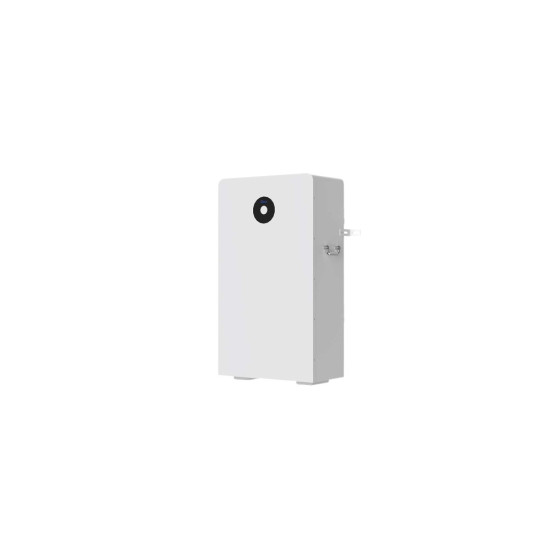
Deye RW-F16 battery, 16 kWh, LiFePo4
Autonomy for a whole evening: 16 kWh, of which 14.4 kWh usable, 160 A continuous and a 300 A peak for appliances that are hard to start.
LV
11.205,83 RON incl. VATexcl. VAT: 9.261,02 RON
The maximum configuration of the BOS-G series: 61,44 kWh from 12 modules of 5,12 kWh at 614,4 V, for buildings that want to get through the consumption peaks.
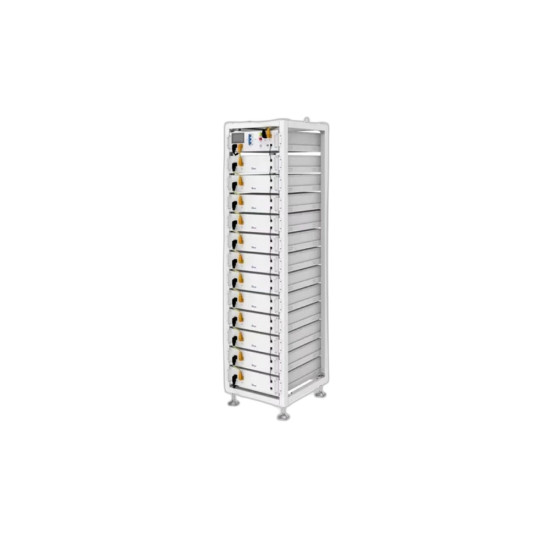
This is a complete energy store, made up of twelve identical modules mounted in a rack and connected one after another, plus the control box that runs and protects them. Twelve modules is the maximum the series accepts in a single assembly, so this is the most capacious version of the family. From the outside it behaves like a single large battery, which charges when energy is cheap or abundant and discharges when it costs a lot or when the grid is missing.
With 61,44 kWh available, the system can support a hall, a warehouse or an office building overnight and, above all, can cover the consumption peaks during the day, so that you do not exceed the contracted power. It charges and discharges at 100 A rated, with a peak of 120 A. It is a heavy assembly: each module measures 440 x 585 x 133 mm and about 46-49 kg, and the control box 440 x 570 x 150 mm and about 19 kg, so installation requires a strong floor and enough people. Being IP20, it is installed indoors or in a dedicated cabinet. Worth remembering for operation: the modules charge only between 0 and 55 degrees C, but can deliver energy from -20 degrees C, so in a very cold space a frost-free room is preferable. If more is needed, several assemblies of this kind can be paralleled.
HV system of 61,44 kWh, the maximum configuration on a single cluster: 12 BOS-G-Pack5.1 modules of 5,12 kWh connected in series, nominal voltage 614,4 Vdc. Modules with LiFePO4 cells, 51,2 V nominal, 100 Ah, rated charging/discharging current 100 A and peak 120 A, dimensions 440 x 585 x 133 mm, about 46-49 kg each, 19 inch rack format. The BOS-G-PDU-2 unit covers the 200-1000 Vdc range, contains the master BMS, the contactors and the protections, communicates via CAN and RS485, measures 440 x 570 x 150 mm and about 19 kg. IP20 assembly, installation indoors or in a dedicated cabinet; permitted temperature on charging 0...55 degrees C, on discharging -20...55 degrees C; paralleling with other clusters for higher capacities. 10-year warranty.
Suitable for a hall, a warehouse or an office building with a Deye high-voltage hybrid inverter, which needs maximum capacity on a single assembly and a frost-free indoor space.
| System energy | 61,44 kWh |
|---|---|
| Configuration | 12 module BOS-G-Pack5.1 x 5,12 kWh, in serie |
| Cell technology | LiFePO4 (LFP) |
| Nominal system voltage | 614,4 Vdc |
| Control box voltage range | 200 - 1000 Vdc |
| Rated charging/discharging current | 100 A |
| Maximum current | 120 A |
| Module dimensions | 440 x 585 x 133 mm, cca. 46-49 kg |
| Control unit | BOS-G-PDU-2, 440 x 570 x 150 mm, cca. 19 kg |
| Communication | CAN, RS485 |
| Protection rating | IP20 |
| Charging / discharging temperature | 0...55 grade C / -20...55 grade C |
10 years
Series-level specifications — valid for the product family
The Deye BOS-G storage package of 61,44 kWh represents the maximum configuration of the BOS-G series on a single cluster. It consists of 12 BOS-G-Pack5.1 modules of 5,12 kWh each, connected in series, plus the BOS-G-PDU-2 control unit. The nominal voltage of the bank is 614,4 V.
The modules have LiFePO4 cells, nominal voltage 51,2 V and capacity 100 Ah each, with a rated charging and discharging current of 100 A and a peak of 120 A. Each module has dimensions of 440 x 585 x 133 mm and a mass of about 46 - 49 kg, in 19 inch rack format.
BOS-G-PDU-2 provides the management of the cluster: it covers the 200 - 1000 Vdc range, contains the master BMS, the contactors and the protections, and communicates via CAN and RS485 with the inverter. It has dimensions of 440 x 570 x 150 mm and a mass of about 19 kg.
The whole assembly has a protection rating of IP20 and is installed indoors or in a dedicated cabinet. The permitted charging temperature for the modules is 0...55 degrees C, and the discharging one -20...55 degrees C. The system can be paralleled with other clusters for higher capacities.
Autonomy for a whole evening: 16 kWh, of which 14.4 kWh usable, 160 A continuous and a 300 A peak for appliances that are hard to start.
Keeps the energy produced during the day and uses it in the evening: 5.12 kWh, of which 4.6 kWh usable, 19 inch rack format and more than 6000 cycles.
Battery of 5,12 kWh for hybrid inverters on 48 V: over 6000 cycles, 100 A continuous discharge and the possibility of connecting up to 50 modules in parallel.
Modular high-capacity battery, from 9.9 up to 26.4 kWh, designed to cover the evening and the night. 30 A continuous, efficiency above 96%, over 6,000 cycles, IP65.