Deye
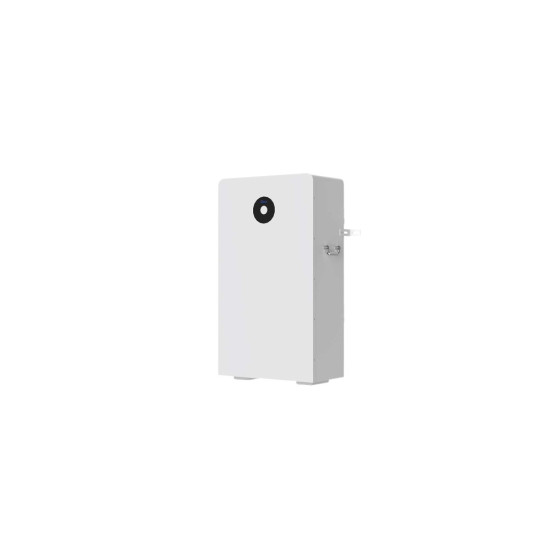
Deye RW-F16 battery, 16 kWh, LiFePo4
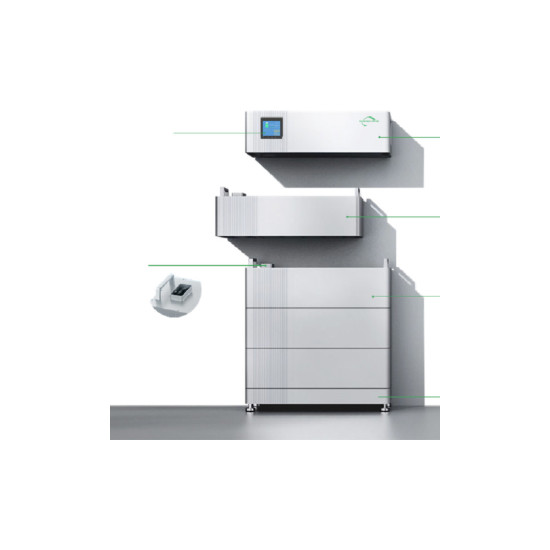
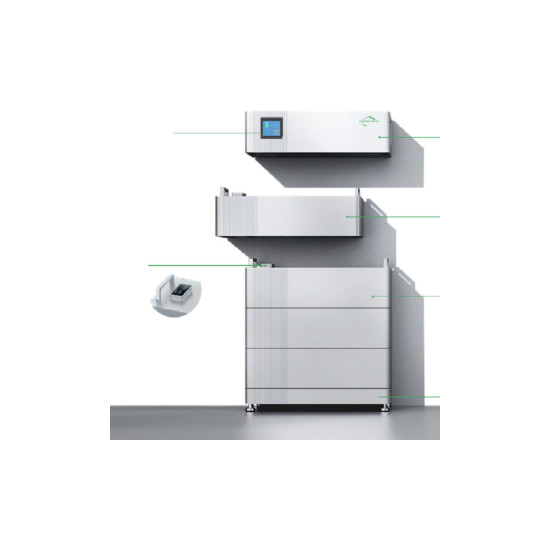
Autonomy for a whole evening: 16 kWh, of which 14.4 kWh usable, 160 A continuous and a 300 A peak for appliances that are hard to start.
LV
11.205,83 RON incl. VATexcl. VAT: 9.261,02 RON
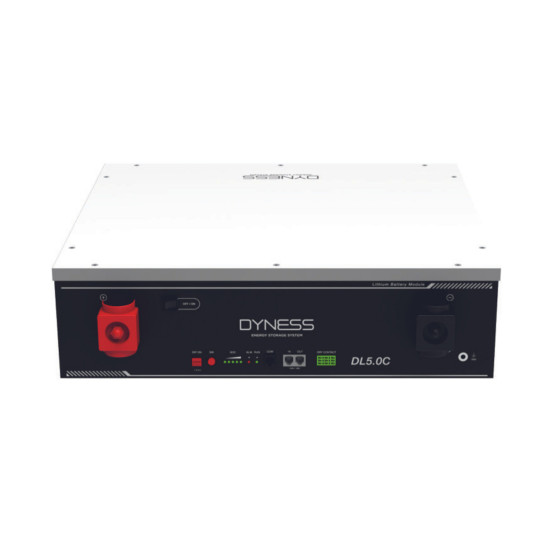
Keeps the energy produced during the day and uses it in the evening: 5.12 kWh, of which 4.6 kWh usable, 19 inch rack format and more than 6000 cycles.
A battery of this type is an energy tank for the house: it fills up during the day from the panels' surplus and empties in the evening and at night, when the sun no longer produces but consumption continues. The cells are LiFePO4, a cobalt-free chemistry, appreciated for thermal stability and long service life. The battery has its own brain, called BMS, which protects it by itself from overcharging, too deep a discharge or unsuitable temperatures, so it does not require your daily attention.
Of the 5.12 kWh nominal, 4.6 kWh are actually usable, that is enough for lighting, fridge, television, internet and the small loads of an ordinary evening, with a top-up from the grid for the large loads. It can deliver 100 A continuously and 150 A for 2 minutes, so it also withstands the starting of more demanding appliances. The declared life exceeds 6000 cycles at a discharge of 90%, that is more than 6000 almost complete fillings and emptyings, which means many years of daily use. It is mounted in a standard 19 inch rack, on the wall or on a floor stand, it takes up 440 x 133 x 540 mm and weighs 45 kg, so it is lifted by two people. Being IP20, its place is indoors, in a dry room; it has no fan, so it is completely silent. If you want more autonomy, you add identical modules, up to 64 units, that is about 327 kWh.
Cobalt-free LiFePO4 cells, 51.2 Vdc nominal, 100 Ah, 5.12 kWh nominal and 4.6 kWh usable at 90% DOD, operating range 43.2-57.6 Vdc. Integrated BMS with 100 A continuous current and 150 A peak for 2 minutes, protections against overcharging, excessive discharge, overcurrent and temperature. More than 6000 cycles at 90% DOD, -20...55 degrees C. 19 inch rack format, 440 x 133 x 540 mm, 45 kg, rack, wall or floor stand mounting, IP20, natural cooling. CAN 2.0 and RS485 communication, paralleling up to 64 units (about 327 kWh). 10-year warranty, with 16 MWh of energy throughput and 70% residual capacity at the end.
Suitable for a home with a 48 V hybrid inverter which wants to cover its evening consumption and have a reserve during an outage, with the possibility of adding modules as the needs grow.
| Cell technology | LiFePO4 fara cobalt |
|---|---|
| Nominal voltage | 51,2 Vdc |
| Capacity | 100 Ah |
| Nominal energy | 5,12 kWh |
| Usable energy | 4,6 kWh (90% DOD) |
| Voltage range | 43,2 - 57,6 Vdc |
| Maximum continuous current | 100 A |
| Peak current (2 min) | 150 A |
| Number of cycles | 6000+ @ 90% DOD |
| Dimensions | 440 x 133 x 540 mm (rack 19 inch) |
| Weight | 45 kg |
| Protection rating | IP20, racire naturala |
| Communication | CAN 2.0, RS485 |
| Units in parallel | max. 64 (cca. 327 kWh) |
| Operating temperature | -20...55 grade C |
10 years, with 16 MWh of energy throughput and 70% residual capacity at the end
Specifications confirmed from the manufacturer's datasheet
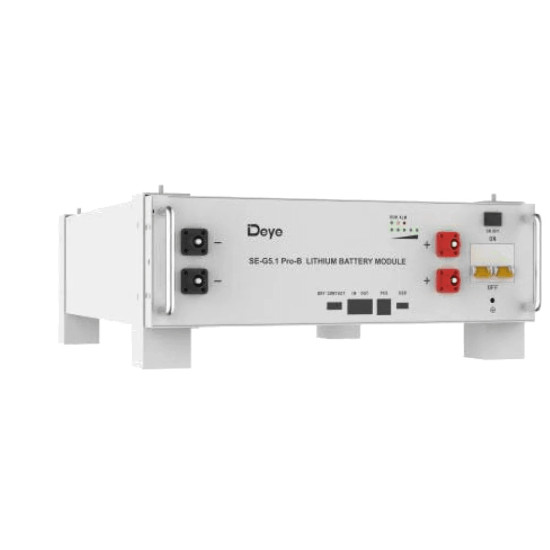
Deye SE-G5.1 Pro-B is a low-voltage battery from the Spring SE series, built on cobalt-free LiFePO4 cells. The nominal voltage is 51.2 V, the capacity 100 Ah and the nominal energy 5.12 kWh, of which 4.6 kWh are usable at a depth of discharge of 90%. The voltage range in operation is 43.2 - 57.6 V.
The integrated BMS allows a continuous current of 100 A and a peak of 150 A for 2 minutes, with protections against overcharging, excessive discharge, overcurrent and temperature. The declared service life exceeds 6000 cycles at 90% DOD, and the operating temperature range is -20...55 degrees C.
The format is compatible with standard 19 inch racks, the dimensions being 440 x 133 x 540 mm and the weight 45 kg, with mounting options in a rack, on the wall or on a floor stand. The protection rating is IP20, for indoor installation. The cooling is natural.
Communication is done through CAN 2.0 and RS485. Up to 64 units can be connected in parallel, which means a total capacity of approximately 327 kWh, covering both residential and small commercial applications.
Autonomy for a whole evening: 16 kWh, of which 14.4 kWh usable, 160 A continuous and a 300 A peak for appliances that are hard to start.
Battery of 5,12 kWh for hybrid inverters on 48 V: over 6000 cycles, 100 A continuous discharge and the possibility of connecting up to 50 modules in parallel.
Modular high-capacity battery, from 9.9 up to 26.4 kWh, designed to cover the evening and the night. 30 A continuous, efficiency above 96%, over 6,000 cycles, IP65.
Modular battery for the home, from 5.52 to 13.80 kWh, made for short power peaks. Efficiency above 96%, IP65, expandable up to about 80 kWh usable.