Deye
Deye RW-F16 battery, 16 kWh, LiFePo4
Autonomy for a whole evening: 16 kWh, of which 14.4 kWh usable, 160 A continuous and a 300 A peak for appliances that are hard to start.
LV
11.205,83 RON incl. VATexcl. VAT: 9.261,02 RON
Slim enough to fit on any wall, including outdoors: 10.24 kWh of which 9.728 kWh usable, 10.24 kW on discharge and a minimum of 8000 cycles.
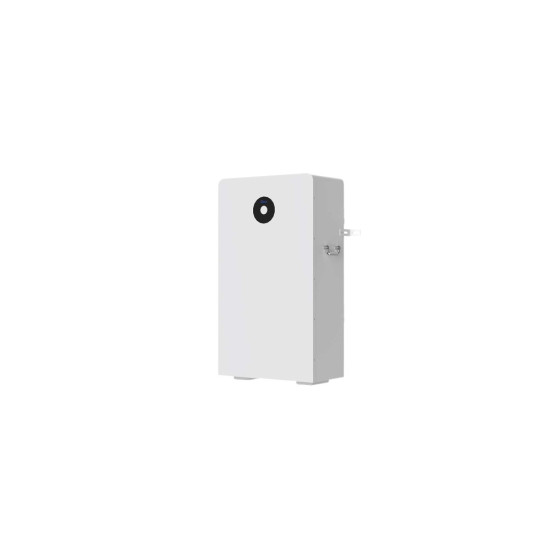
Dyness PowerBox G2 is a battery that mounts on the wall, like a flat panel, and keeps the energy produced by the panels for the hours without sun. The enclosure is sealed, so it can also be mounted on an outside wall, in the rain. Inside it has an aerosol extinguisher that detects and smothers a possible fire within a few seconds, plus automatic pressure release.
Out of the 10.24 kWh, 9.728 kWh are usable, that is 95%, indicatively enough for the evening and the night of a home with average consumption. The usual working power is 5.12 kW, but if needed the battery can deliver 10.24 kW, that is it can on its own supply several large loads at the same time, with a peak of 300 A for 2 minutes. It is only 165 mm thick, at 710 x 640 mm and 99.7 kg, so it does not take up passage space, but it needs a solid wall. The declared service life is a minimum of 8000 cycles, respectively 10 years. It discharges between -20 and 55 deg C, and charging, normally possible from 0 deg C, goes down to -20 deg C if you choose the optional self-heating function.
LiFePO4, 51.2 V nominal, range 44.8-57.6 V, 200 Ah, 10.24 kWh nominal and 9.728 kWh usable at 95% DoD, minimum 8000 cycles. Rated charge/discharge power 5.12 kW at 0.5C (100 A), maximum discharge 1C — 200 A and 10.24 kW — with a peak of 300 A for 2 minutes at 25 deg C. IP66 enclosure of 710 x 165 x 640 mm and 99.7 kg, with an aerosol extinguisher that intervenes in about 5 seconds and automatic pressure release; discharge -20...55 deg C, charge 0...55 deg C, extended to -20 deg C with the optional self-heating function. CAN and RS485 communication, built-in WiFi with OTA updates, up to 50 units in parallel (512 kWh); declared compatibility with SMA, Schneider, Victron, Ingeteam, Solis, GoodWe, Growatt, Solplanet, Luxpower, Deye and APsystems, 10-year warranty.
Suitable for a home with average consumption where space is limited and the battery must sit on the wall, possibly outdoors, without protruding much into the room.
| Chemistry | LiFePO4 |
|---|---|
| Nominal / usable energy | 10,24 kWh / 9,728 kWh |
| Voltage / capacity | 51,2 V (44,8-57,6 V) / 200 Ah |
| Power | 5,12 kW rated, 10,24 kW max. discharge (200 A) |
| Discharge peak | 300 A / 2 min at 25 deg C |
| DoD / cycles | 95% / minimum 8000 cycles (10 years) |
| Dimensions / mass | 710 x 165 x 640 mm / 99,7 kg |
| Protection | IP66, built-in aerosol extinguisher |
| Communication | CAN / RS485, built-in WiFi |
| Expandability | up to 50 units in parallel (512 kWh) |
10 years
Specifications confirmed from the manufacturer's datasheet
Dyness PowerBox G2 is a LiFePO4 wall battery for residential applications, with 10.24 kWh nominal energy and 9.728 kWh usable energy at 95% DoD. The rated voltage is 51.2 V (range 44.8-57.6 V), and the capacity 200 Ah. The rated charge/discharge power is 5.12 kW at 0.5C (100 A), and the maximum discharge reaches 1C, that is 200 A and 10.24 kW, with a peak of 300 A for 2 minutes at 25 deg C. The declared service life is a minimum of 8000 cycles, respectively 10 years.
The enclosure has protection rating IP66 and a slim profile, with dimensions of 710 x 165 x 640 mm and a mass of 99.7 kg. Discharge is possible between -20 and 55 deg C, and charging between 0 and 55 deg C, extended to -20 deg C with the optional self-heating function. The battery includes an aerosol extinguisher that detects and extinguishes a fire in about 5 seconds, with automatic pressure release. Communication is over CAN and RS485, with a built-in WiFi module and OTA updates from the app. Up to 50 units can be connected in parallel (512 kWh), and compatibility covers SMA, Schneider, Victron, Ingeteam, Solis, GoodWe, Growatt, Solplanet, Luxpower, Deye and APsystems inverters.
Autonomy for a whole evening: 16 kWh, of which 14.4 kWh usable, 160 A continuous and a 300 A peak for appliances that are hard to start.
Keeps the energy produced during the day and uses it in the evening: 5.12 kWh, of which 4.6 kWh usable, 19 inch rack format and more than 6000 cycles.
Battery of 5,12 kWh for hybrid inverters on 48 V: over 6000 cycles, 100 A continuous discharge and the possibility of connecting up to 50 modules in parallel.
Modular high-capacity battery, from 9.9 up to 26.4 kWh, designed to cover the evening and the night. 30 A continuous, efficiency above 96%, over 6,000 cycles, IP65.