Deye
Deye RW-F16 battery, 16 kWh, LiFePo4
Autonomy for a whole evening: 16 kWh, of which 14.4 kWh usable, 160 A continuous and a 300 A peak for appliances that are hard to start.
LV
11.205,83 RON incl. VATexcl. VAT: 9.261,02 RON
It stores the energy produced by the panels during the day, so that you use it in the evening and at night: 6.9 usable kWh, 7 kW on charging and discharging, IP66 enclosure for outdoor mounting.
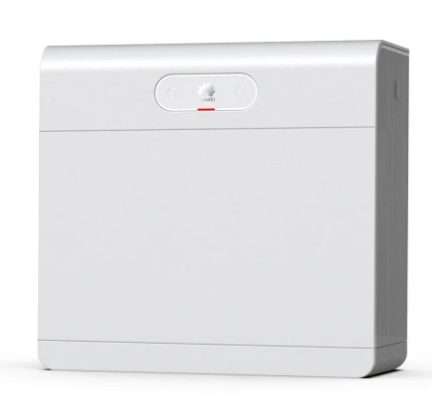
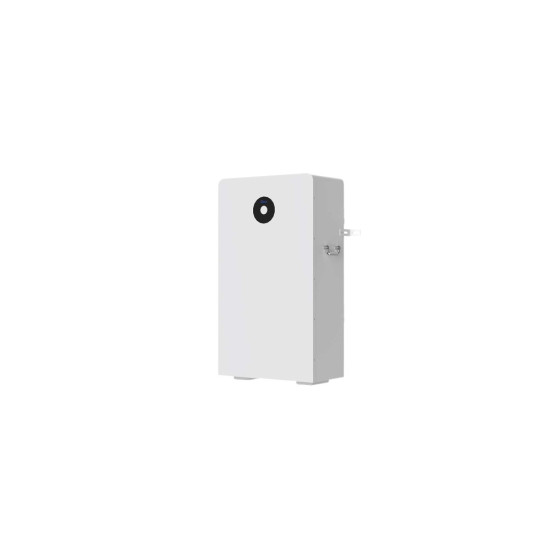
It is a large battery for the home, which keeps the energy produced by the panels during the day so that you can use it in the evening, at night or when the power goes down. It looks like a compact metal cabinet, it stands on the floor, indoors or outdoors, and it has no fans: it cools itself, through the natural circulation of air, so it operates quietly. The cells are LiFePO4 (lithium iron phosphate), a chemistry chosen for thermal stability and long service life. The battery works together with a Huawei SUN2000 inverter, which decides when it charges and when it discharges.
The 6.9 usable kWh cover the evening and night consumption of an ordinary home: fridge, lighting, television, network equipment and a few appliances. The power of 7 kW both on charging and on discharging means the battery can support several large loads at once; as a guideline, at a constant consumption of 1 kW the reserve of 6.9 kWh lasts around 7 hours. The cabinet takes up little room, 590 x 255 x 510 mm, but weighs about 80 kg including the floor fixing kit, so it needs a solid floor. If your consumption grows, you can add modules and reach 14 kWh or 21 kWh, and in large houses up to 4 systems can work in parallel. Maintenance is minimal, with no filters or fans to clean, and the state of charge is monitored from the FusionSolar platform.
The voltage range in operation is 350-560 V for single-phase installations and 600-980 V for three-phase installations, depending on the associated SUN2000 inverter. The S1 series works at a power/energy ratio of approximately 1C, hence the 7 kW of charging and discharging on the 6.9 kWh unit. RS485, FE and CAN communication, monitoring in FusionSolar. IP66 enclosure, natural convection cooling, -20...+55 degrees C, relative humidity 5-95%, maximum altitude 4000 m with derating above 2000 m; 10-year warranty.
Suitable for a house that already has or is about to have a Huawei SUN2000 inverter and wants to cover the evening and night consumption, with the option of later extending to 14 or 21 kWh.
| Cell technology | LiFePO4 (LFP) |
|---|---|
| Usable energy | 6,9 kWh |
| Maximum charging/discharging power | 7 kW |
| Voltage range | 350 - 560 V (mono) / 600 - 980 V (trifazat) |
| Dimensions | 590 x 255 x 510 mm |
| Weight | cca. 80 kg (cu suport de podea) |
| Protection rating | IP66 |
| Cooling | convectie naturala |
| Operating temperature | -20...+55 grade C |
| Relative humidity | 5 - 95% |
| Maximum altitude | 4000 m (derating peste 2000 m) |
| Communication | RS485 / FE / CAN |
| Expansion | pana la 21 kWh pe unitate; max. 4 sisteme in paralel |
10 years
Specifications confirmed from the manufacturer's datasheet
Huawei LUNA2000-7-S1 is the basic configuration of the S1 generation of the Smart String ESS system. The cells are LiFePO4, and the usable energy is 6.9 kWh. Compared with the previous generation, the S1 series allows a power/energy ratio of approximately 1C, so that the maximum charging and discharging power is 7 kW.
The voltage range in operation is 350 - 560 V for single-phase installations and 600 - 980 V for three-phase installations, depending on the SUN2000 inverter it works with. Communication is done through RS485, FE and CAN, and monitoring is done in the FusionSolar platform.
The cabinet has an IP66 protection rating and natural convection cooling, without fans. The operating temperature range is -20...+55 degrees C, with relative humidity 5 - 95% and a maximum altitude of 4000 m, with derating above 2000 m.
The dimensions of the 7 kWh unit are 590 x 255 x 510 mm, and the weight is about 80 kg, including the floor fixing kit. The system can be expanded by adding modules to 14 kWh or 21 kWh, and up to 4 systems can work in parallel.
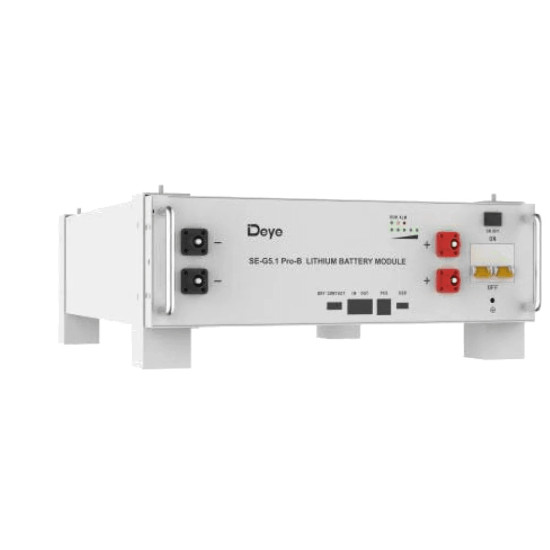
Autonomy for a whole evening: 16 kWh, of which 14.4 kWh usable, 160 A continuous and a 300 A peak for appliances that are hard to start.
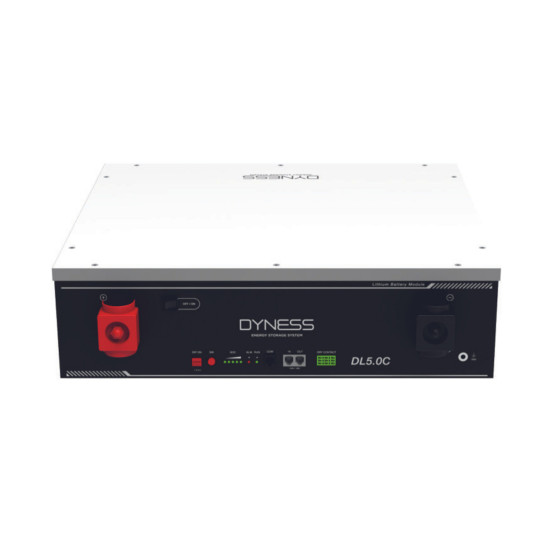
Keeps the energy produced during the day and uses it in the evening: 5.12 kWh, of which 4.6 kWh usable, 19 inch rack format and more than 6000 cycles.
Battery of 5,12 kWh for hybrid inverters on 48 V: over 6000 cycles, 100 A continuous discharge and the possibility of connecting up to 50 modules in parallel.
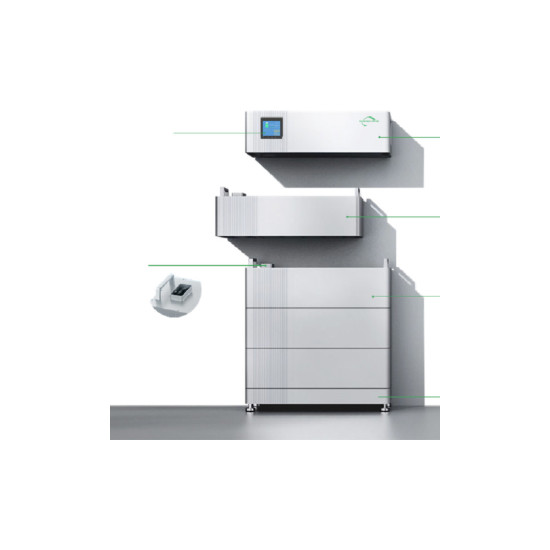
Modular high-capacity battery, from 9.9 up to 26.4 kWh, designed to cover the evening and the night. 30 A continuous, efficiency above 96%, over 6,000 cycles, IP65.