K2 Systems
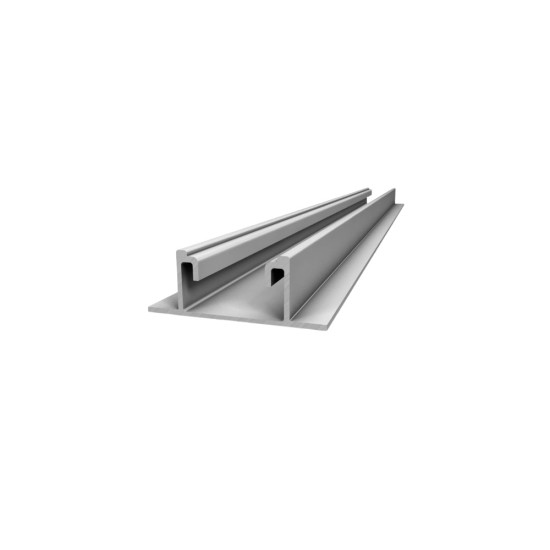
Basic Rail 22 - K2 mounting rail 4800 mm
It supports the panels on a sheet metal roof without loading it: a 4.8 m aluminium profile that weighs about 3.1 kg and raises the modules by only 22.5 mm.
161,39 RON incl. VATexcl. VAT: 133,38 RON
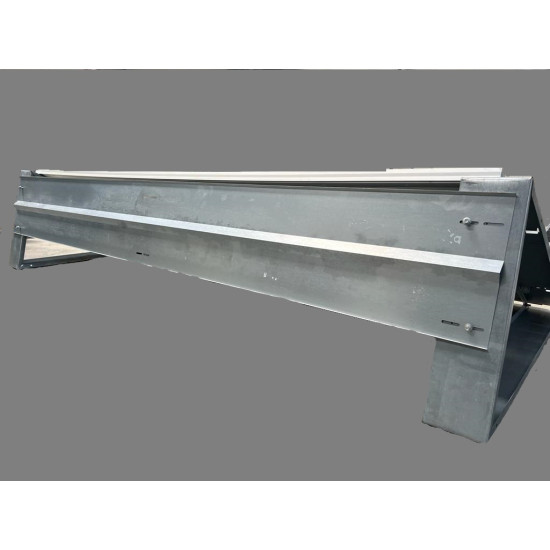
It reduces the force with which the wind tries to lift the panels off the flat roof, so less ballast and fewer holes in the waterproofing are needed. Length 2350 mm, for large-format modules.
On a flat roof, the photovoltaic panels sit tilted on supports, and beneath them a free space remains. The wind enters through that space, slips underneath and pushes the panel upwards, just as the air lifts an aeroplane wing. The windbreaker is a sheet mounted behind the row of modules, which closes that space and stops the air flow from passing under the panel.
The effect is seen directly in the quantity of material and in the condition of the roof: with a windbreaker fitted, the ballast weight needed to hold the system in place decreases, and where the structure is mechanically fixed, the number of penetrations through the waterproofing decreases as well, that is fewer places where water ingress could appear. The length of 2350 mm is sized for the wide modules of the current generation, and adjacent panels join by overlapping, so that no gaps remain through which the air could pass. On buildings with a small load-bearing reserve, this weight reduction can even be the condition that makes the project possible without structural strengthening. The material is steel sheet with anti-corrosion coating or aluminium, fixed with stainless steel screws, that is parts chosen for permanent outdoor exposure.
The deflector panels are made of steel sheet with anti-corrosion coating of the zinc-magnesium or hot-dip galvanising type, respectively of aluminium, and are fixed to the system supports with stainless steel screws. The nominal length of 2350 mm corresponds to large-format modules; the joint between adjacent panels is made by overlapping, without gaps. The layout across the array, including the treatment of the row ends and of the edge and corner zones, is established according to the aerodynamic report of the mounting system and the wind load calculation to SR EN 1991-1-4.
Suited to installations on flat roofs with large-format modules, especially on buildings where the additional weight on the floor slab must be limited or where a reduction in the number of fixings through the waterproofing is wanted.
| Type | Deflector de vant (paravant / windbreaker) pentru sisteme pe acoperis plat |
|---|---|
| Nominal length | 2350 mm |
| Material | Tabla de otel cu acoperire anticoroziva (zinc-magneziu / zincare) sau aluminiu |
| Function | Reduce presiunea de ridicare pe fata inferioara a modulelor |
| Practical effect | Reduce balastul si numarul de ancoraje necesare |
| Joint | Prin suprapunere intre panouri alaturate |
Generic product — standard specifications
The 2350 mm windbreaker is the deflector panel mounted behind the row of tilted modules on flat roofs, sized for large-format modules. By closing the space between the module and the roof surface, the deflector prevents the formation of the upward air flow under the module and thus reduces the uplift pressure acting on its lower face.
The effect translates directly into savings of material and of stress on the building: with a deflector fitted, the amount of ballast needed to keep the system in position decreases, and where mechanical anchors are used the number of penetrations of the waterproofing decreases. On roofs with a small load-bearing capacity reserve, this can be the condition that makes the project feasible without structural strengthening.
The panels are manufactured from steel sheet with anti-corrosion coating (zinc-magnesium type systems or hot-dip galvanising) or from aluminium, and are fixed to the system supports with stainless steel screws. The length of 2350 mm corresponds to the wider modules of the current generation; adjacent panels join by overlapping, so as not to leave gaps through which the air could pass. Their layout across the array must follow the indications in the aerodynamic report of the system and the load calculation according to SR EN 1991-1-4.
It supports the panels on a sheet metal roof without loading it: a 4.8 m aluminium profile that weighs about 3.1 kg and raises the modules by only 22.5 mm.
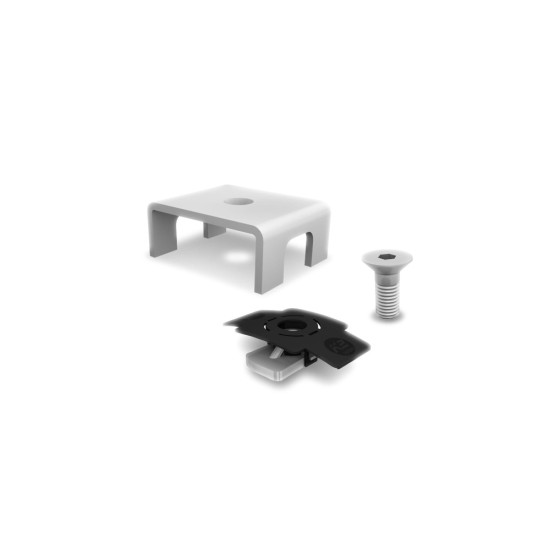
It prevents the rail from migrating on the roof: a fixed point that locks the BasicRail 22 bar and splits the expansion towards both ends. K2 BasicLock 22 set, code 1003558.
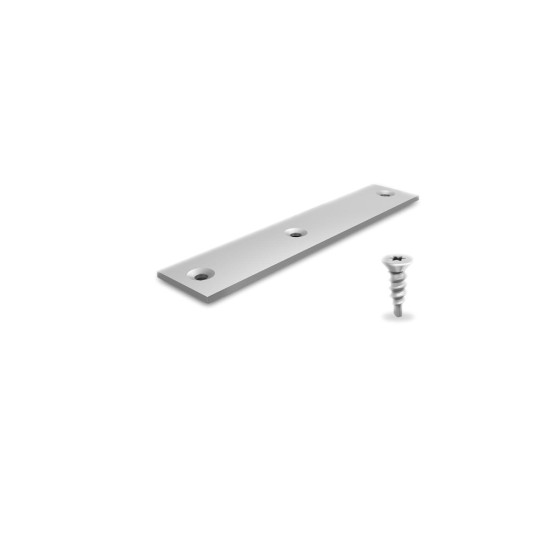
It joins two rails end to end so that you get a continuous row, without cutting bars. Aluminium and A2 stainless steel, 3 fixing holes, Torx T25 screws included.
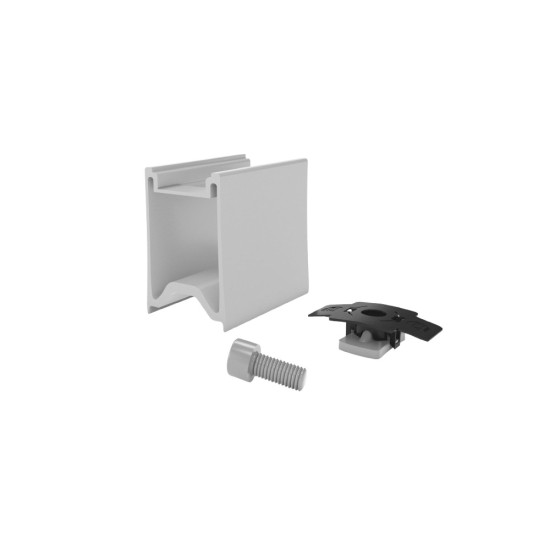
Lifts the panels off the rail so air can circulate underneath: cooler modules lose less power, and there is room for microinverters below. K2 RailUp set, code 2003191.