K2 Systems
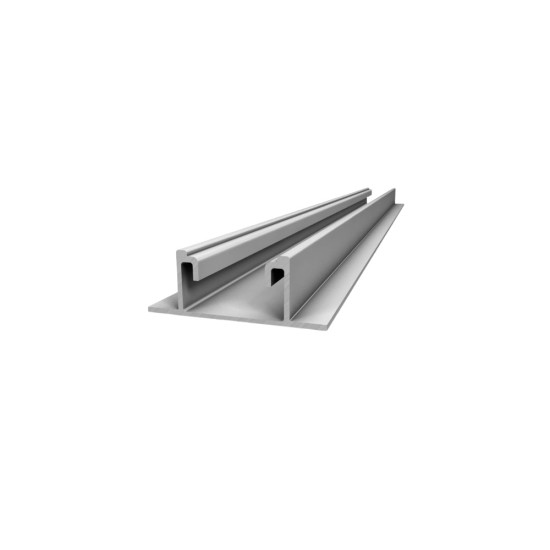
Basic Rail 22 - K2 mounting rail 4800 mm
It supports the panels on a sheet metal roof without loading it: a 4.8 m aluminium profile that weighs about 3.1 kg and raises the modules by only 22.5 mm.
161,39 RON incl. VATexcl. VAT: 133,38 RON
You join two rails end to end and obtain a single, continuous one: aluminium connector for H-type profiles, fixed with screws, usually M10.
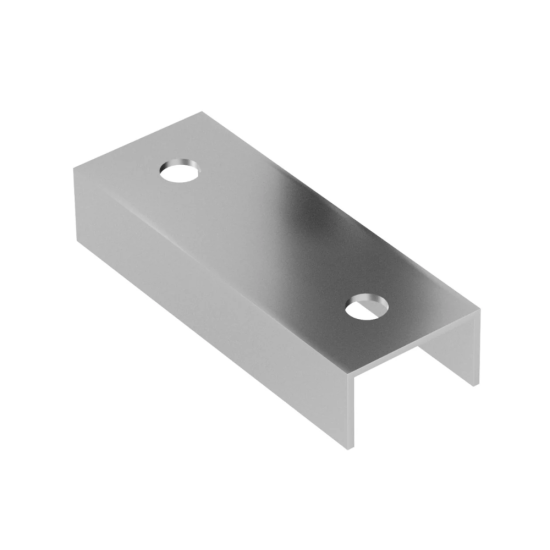
It is the part that joins two aluminium rails one as the extension of the other. It enters partially into each of the two profiles and is fixed with screws, so that the joint behaves like a continuous rail, not like two hinged pieces that can bend in the middle. In practice, it lets you make rows of any length out of standard-length profiles.
The concrete advantage is that you cover large spans without ordering profiles in unusual lengths and you lose less material when cutting. The basic rule at installation: the joint is not placed in the middle of the distance between two support points, but as close as possible to a support - hook, adapter or fixing foot - so that the zone with maximum stress does not coincide with the joint zone. On long runs, expansion compensation must also be provided: on the roof, the temperature varies over the year by about 60-70 K, and a long rail changes its length noticeably, so the lack of expansion joints produces deformations and stresses at the anchoring points. Being made of aluminium, like the profile, it does not rust and does not create contact problems between different metals.
Aluminium splice connector for H-type photovoltaic panel profiles, inserted partially into both sections and fixed with screws, usually M10, so that the joint transmits the bending moment. The joint is positioned in the vicinity of a support point, not at mid span. On long runs expansion joints are provided, with reference to thermal variations of the order of 60-70 K on the roof. The aluminium construction ensures electrochemical compatibility with the profile and resistance to atmospheric corrosion.
Suitable when you have panel rows longer than a single rail - large hall roofs, continuous fields - or when you want to extend later a structure that is already installed.
| Type | Splice connector for rail |
|---|---|
| Material | Aluminium |
| Compatible profile | H-type profile for photovoltaic panels |
| Fixing method | With screws into the profile (usually M10) |
| Function | Structural continuity between two rail sections |
Generic product — standard specifications
Aluminium splice element intended for extending H-type profiles, by coupling two rails end to end. The connector is inserted partially into each of the two profiles and fixed with screws, so that the joint transmits the bending moment and behaves like a continuous rail, not like two hinged sections.
Using the connector allows large spans to be covered without using profiles in unusual lengths and reduces material loss at cutting. The basic rule at installation is that the joint should not be placed in the middle of a span between two support points, but as close as possible to a support (hook, adapter or fixing foot), so that the zone with maximum bending stress does not coincide with the joint zone.
Also, on long runs compensation for the thermal expansion of the aluminium must be provided: with temperature variations of the order of 60-70 K on the roof, a long rail changes its length noticeably, and the lack of expansion joints generates deformations and stresses at the anchoring points. The aluminium construction ensures electrochemical compatibility with the profile and resistance to atmospheric corrosion.
It supports the panels on a sheet metal roof without loading it: a 4.8 m aluminium profile that weighs about 3.1 kg and raises the modules by only 22.5 mm.
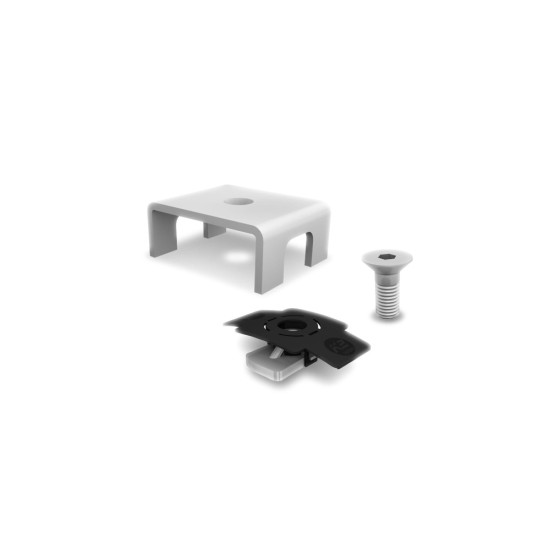
It prevents the rail from migrating on the roof: a fixed point that locks the BasicRail 22 bar and splits the expansion towards both ends. K2 BasicLock 22 set, code 1003558.
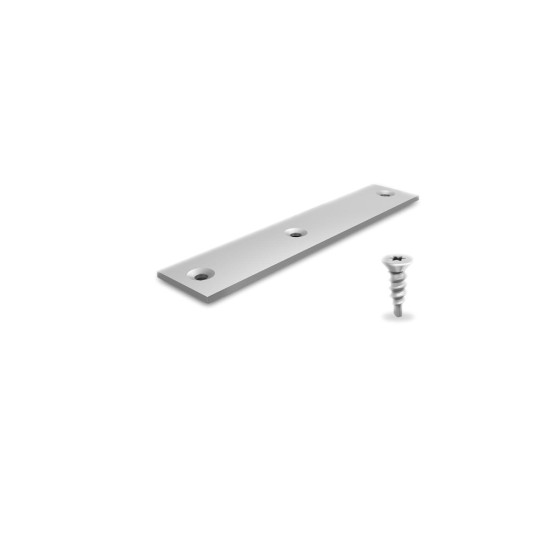
It joins two rails end to end so that you get a continuous row, without cutting bars. Aluminium and A2 stainless steel, 3 fixing holes, Torx T25 screws included.
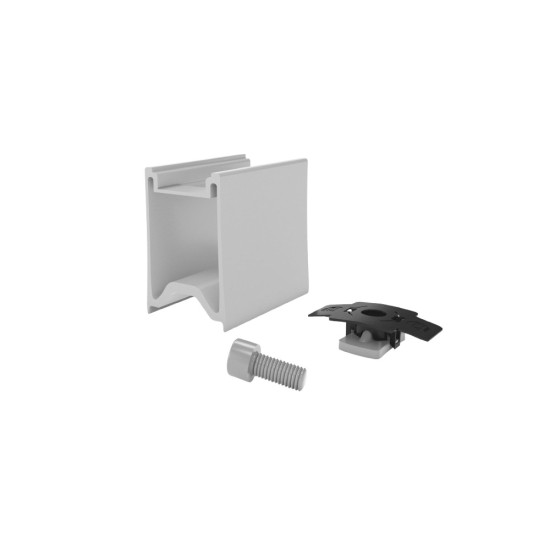
Lifts the panels off the rail so air can circulate underneath: cooler modules lose less power, and there is room for microinverters below. K2 RailUp set, code 2003191.