K2 Systems
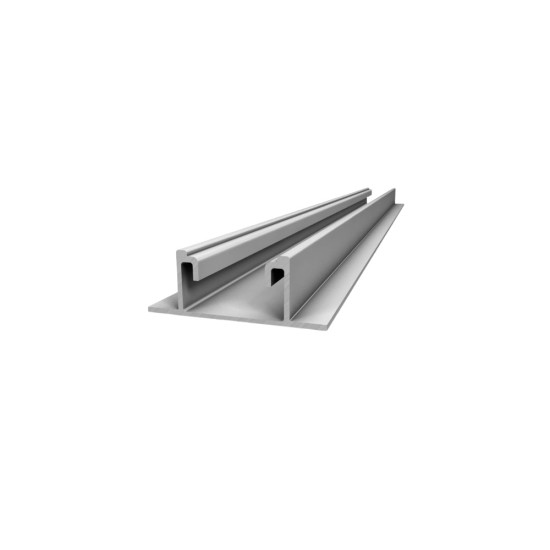
Basic Rail 22 - K2 mounting rail 4800 mm
It supports the panels on a sheet metal roof without loading it: a 4.8 m aluminium profile that weighs about 3.1 kg and raises the modules by only 22.5 mm.
161,39 RON incl. VATexcl. VAT: 133,38 RON
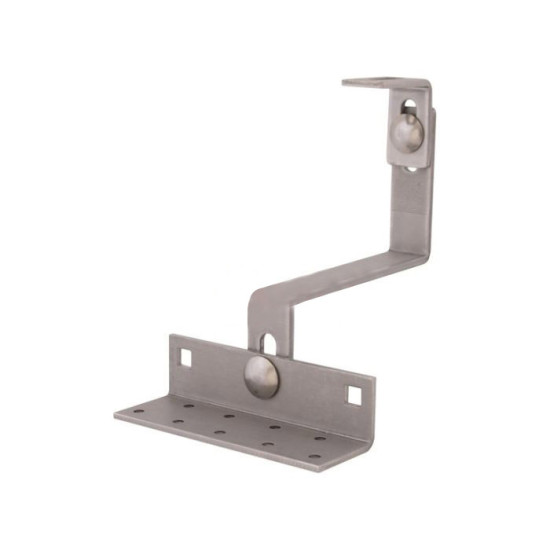
Roof hook for tiles, with a base plate adjustable to 3 heights, so that the tile above sits freely and does not crack under snow load.
The hook is the part that carries the weight of the panels on the roof into the timber structure of the house. It is fixed to the rafter or to the boarding, under a temporarily lifted tile, and its arm comes out above the roof covering and supports the rail on which the panels are clamped. The tile is then put back in place, over the hook.
The base plate can be mounted at three different heights, and this adjustment solves two problems at once: it matches the hook to the thickness of your tile, ceramic or concrete, and it lets the tile above sit freely, without resting on metal. A hook mounted without the correct clearance is the typical cause of broken tiles and of leaks appearing after the first winter with snow. The parts are made of stainless steel and aluminium, so they do not rust and require no maintenance over the service life of the installation. The rail is coupled with a bolt and nut in the channel of the hook, with fine adjustment in height and laterally, which allows the row to be aligned even if the plane of the roof is not perfect.
Arm and base plate in stainless steel, usually 1.4301 / A2, rail coupling bodies in aluminium and stainless steel clamping bolts. Fixing to the rafter or to the boarding with screws for timber construction, whose number and diameter are established by structural calculation according to the wind and snow loads at the site. Vertical adjustment of the base plate in 3 positions, with connection to the rail through a bolt and nut in the channel of the hook; compatible coverings: ceramic tile and concrete tile.
Suitable for houses with tile roofs and timber roof frames, especially for installations on existing buildings, where the type and thickness of the tile are not known in advance.
| Type | Carlig de acoperis pentru tigla, reglabil pe verticala in 3 pozitii |
|---|---|
| Material | Otel inoxidabil (uzual 1.4301 / A2) si/sau aluminiu |
| Fixing | Pe caprior sau pe astereala, cu suruburi pentru constructii din lemn |
| Role of the adjustment | Adaptarea inaltimii la grosimea tiglei, fara ca tigla sa se sprijine pe carlig |
| Connection to the rail | Surub si piulita in canalul carligului, cu reglaj fin |
| Compatible coverings | Tigla ceramica si tigla din beton |
Generic product — standard specifications
The roof hook for tiles is the element that transmits the loads from the photovoltaic field to the load-bearing structure of the roof frame. It is fixed to the rafter or to the boarding, under the tile that is temporarily lifted, and the arm of the hook comes out above the covering and supports the mounting rail.
The variant adjustable in 3 positions has a base plate that can be mounted at three different vertical levels. The adjustment is important for two reasons: on the one hand it compensates for the differences in thickness between the types of ceramic or concrete tile, on the other hand it ensures that the tile above sits freely, without resting on the hook and without cracking under snow load. A hook mounted without the correct clearance is the typical cause of broken tiles and of subsequent leaks.
The usual materials are stainless steel (usually 1.4301 / A2) for the arm and base plate, and aluminium for the rail coupling bodies, with stainless steel clamping bolts. Fixing to timber is done with screws for timber construction, in a number and diameter established by structural calculation according to the wind and snow loads. The rail is coupled with a bolt and nut in the channel of the hook, with the possibility of fine adjustment in height and laterally.
It supports the panels on a sheet metal roof without loading it: a 4.8 m aluminium profile that weighs about 3.1 kg and raises the modules by only 22.5 mm.
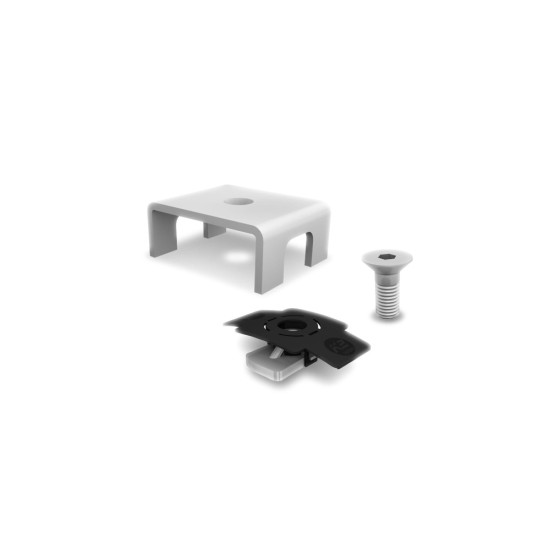
It prevents the rail from migrating on the roof: a fixed point that locks the BasicRail 22 bar and splits the expansion towards both ends. K2 BasicLock 22 set, code 1003558.
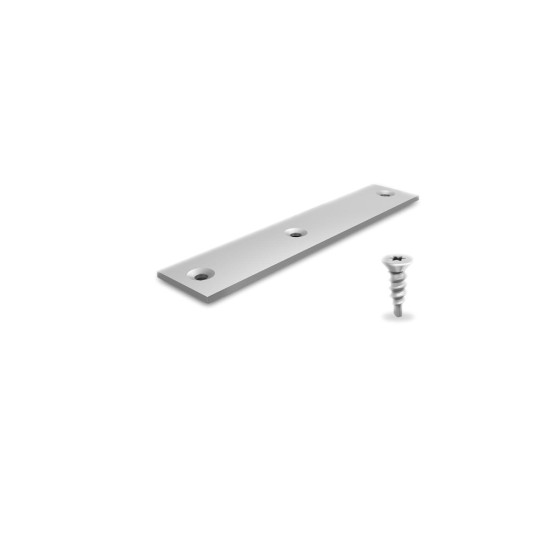
It joins two rails end to end so that you get a continuous row, without cutting bars. Aluminium and A2 stainless steel, 3 fixing holes, Torx T25 screws included.
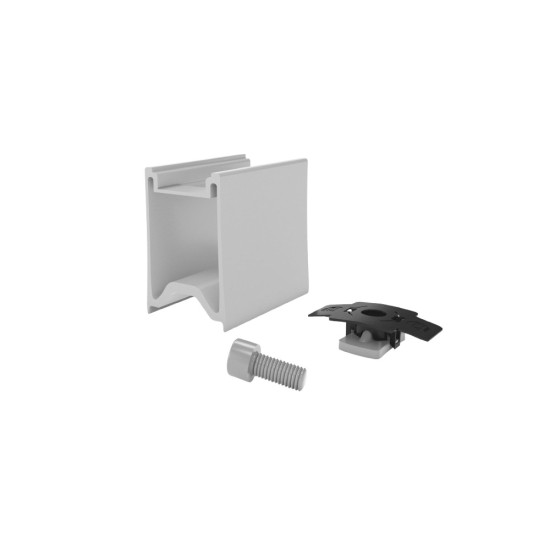
Lifts the panels off the rail so air can circulate underneath: cooler modules lose less power, and there is room for microinverters below. K2 RailUp set, code 2003191.