K2 Systems
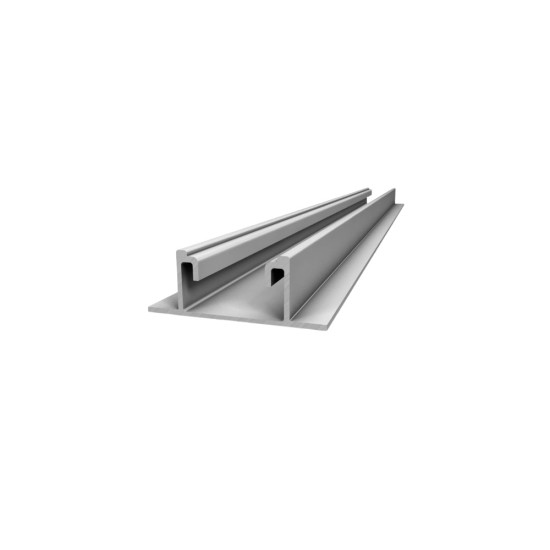
Basic Rail 22 - K2 mounting rail 4800 mm
It supports the panels on a sheet metal roof without loading it: a 4.8 m aluminium profile that weighs about 3.1 kg and raises the modules by only 22.5 mm.
161,39 RON incl. VATexcl. VAT: 133,38 RON
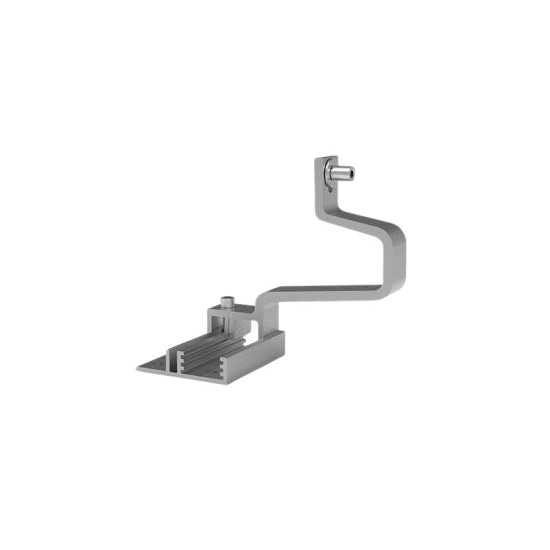
It anchors the entire panel system into the roof truss, on tile roofs: height-adjustable hook, with an interface for H-type aluminium profile.
It is the anchoring part of the whole installation: it is fixed into the wood of the roof, passes under the tile and comes out above the covering, where it receives the rail on which the panels are mounted. Without it, the panels have nothing to hold on to. It is also the only place where the structure touches the roof, so the watertightness depends on how well it is fitted.
The adjustability allows the height and the position of the upper arm relative to the base plate to be set, which compensates for differences in tile thickness and for flatness deviations of the roof; the aim is for all the hooks in a row to bring the rail into the same plane. Just as important, the arm of the hook must not rest on the tile underneath - direct contact leads in time to cracking of the tile and to water ingress. Fitting is usually done with the tile temporarily lifted, after which it is repositioned over the body of the hook; if there is not enough room, the tile is locally pressed or an adapted one is used. How many hooks go on the surface is established by a load calculation, with denser fixings in the edge and corner zones of the roof, where the wind pulls the hardest.
Roof hook adjustable in height and arm position, for coverings of ceramic or concrete tile, with an interface for H-type aluminium profile. Fixing into the rafter or into the load-bearing batten, with appropriate wood screws. The density of the fixings results from the load calculation, increased in the edge and corner zones, where the wind suction is at its maximum. Clearance between the arm of the hook and the tile underneath must always be ensured.
Suited to houses with ceramic or concrete tile covering on a wooden truss, for systems built with H-type aluminium profile.
| Type | Carlig de acoperis ajustabil pentru invelitoare de tigla |
|---|---|
| Adjustment | Ajustabil pe inaltime / pozitie brat |
| Interface | Profil de aluminiu tip H |
| Fixing | In caprior sau in sipca de rezistenta, cu suruburi pentru lemn |
| Function | Ancorarea sistemului fotovoltaic in structura acoperisului |
Generic product — standard specifications
Adjustable roof hook, intended for coverings of ceramic or concrete tile, with an interface for H-type aluminium profile. It is the anchoring element of the whole system: it is fixed into the rafter or into the load-bearing batten, passes under the tile and comes out above the covering, where it receives the rail on which the panels are mounted.
The adjustability allows the height and the position of the upper arm relative to the base plate to be set, which compensates for differences in tile thickness and for flatness deviations of the roof. The aim is for all the hooks in a row to bring the rail into the same plane and for the arm of the hook not to rest on the tile underneath - direct contact leads in time to cracking of the tile and to water ingress.
Fitting is usually done with the tile temporarily lifted, after which it is repositioned over the body of the hook; if there is not enough room, the tile is locally pressed or an adapted tile is used. Fixing into the wood is done with appropriate wood screws, and the number of hooks per surface is established by a load calculation, with increased density in the edge and corner zones of the roof, where the wind suction is at its maximum.
It supports the panels on a sheet metal roof without loading it: a 4.8 m aluminium profile that weighs about 3.1 kg and raises the modules by only 22.5 mm.
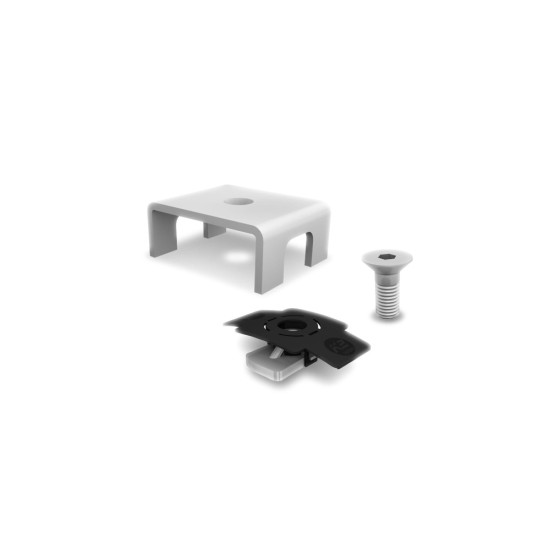
It prevents the rail from migrating on the roof: a fixed point that locks the BasicRail 22 bar and splits the expansion towards both ends. K2 BasicLock 22 set, code 1003558.
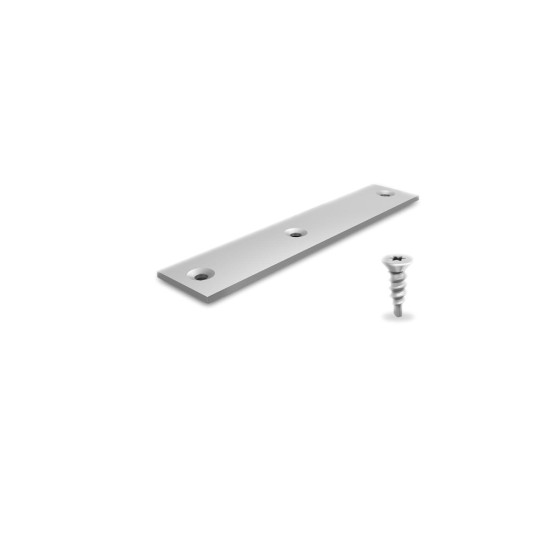
It joins two rails end to end so that you get a continuous row, without cutting bars. Aluminium and A2 stainless steel, 3 fixing holes, Torx T25 screws included.
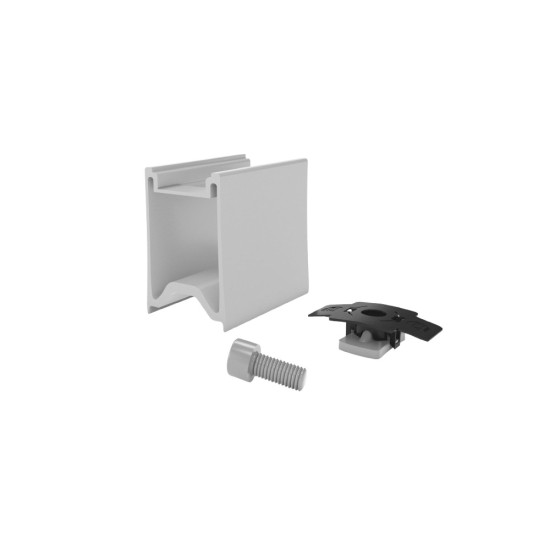
Lifts the panels off the rail so air can circulate underneath: cooler modules lose less power, and there is room for microinverters below. K2 RailUp set, code 2003191.