K2 Systems
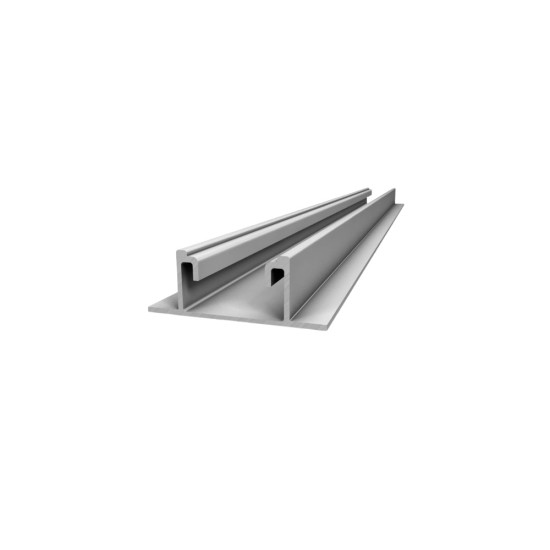
Basic Rail 22 - K2 mounting rail 4800 mm
It supports the panels on a sheet metal roof without loading it: a 4.8 m aluminium profile that weighs about 3.1 kg and raises the modules by only 22.5 mm.
161,39 RON incl. VATexcl. VAT: 133,38 RON
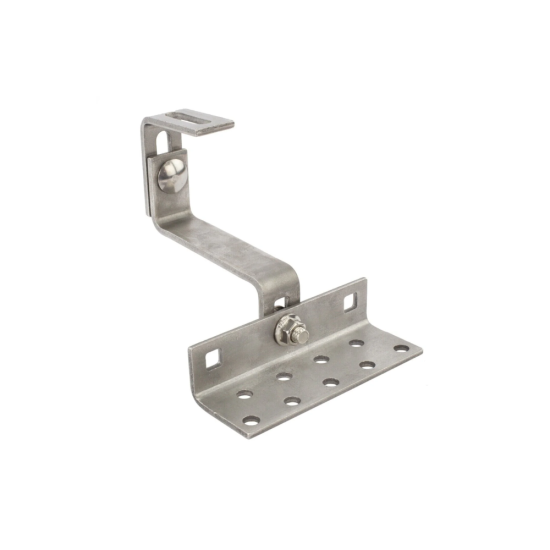
Roof hook with adjustment in two directions, so that the rail comes out straight even if the roof covering is not flat; variant from the range marked angle 150.
The hook is the part that connects the panels to the timber frame of the roof. It passes under the roof covering, is fastened into the load-bearing structure and comes out above, where it receives the aluminium rail on which the panels sit. All the forces pass through it: the weight of the panels, the snow in winter and, above all, the wind that tries to lift them.
Double adjustment means that you can adjust the position in height and laterally without dismantling the hook - very useful on real roofs, which are rarely perfectly flat. In this way you bring all the fixing points into the same plane, the rail comes out straight, and the modules do not end up being stressed by torsion. During installation, the hook is fixed into the load-bearing structure, not just into the boarding or a thin batten, and sufficient clearance must remain from the roof covering, so that it does not press on the tile or on the pantile; where necessary, the tile underneath is pressed or replaced with a profiled piece. How many hooks are needed per panel results from the load calculation for the wind and snow zone of the site, not from a fixed rule.
Roof hook with adjustment in two directions (height and lateral), variant from the range marked angle 150, with an upper interface for fixing the rail through screw and nut. It fully transfers the loads from dead weight, snow and wind from the rail into the roof truss. Mandatory fixing in the load-bearing element - rafter or load-bearing batten - with clearance ensured from the roof covering; the number of hooks per module is established through a load calculation, depending on the wind and snow zone of the site.
Suitable for houses with a tiled roof and timber truss, especially where the roof covering has unevenness and you need adjustment without undoing the fixing.
| Type | Carlig de acoperis dublu reglabil |
|---|---|
| Adjustment | Pe doua directii (inaltime si lateral) |
| Variant from the range | unghi 150 |
| Function | Transfer al incarcarilor de la sina la structura acoperisului |
| Upper interface | Fixare sina/profil prin surub si piulita |
Generic product — standard specifications
Roof hook for photovoltaic systems, in the double adjustment variant, marked in the range as "angle 150". The hook makes the link between the load-bearing structure of the roof (rafter or batten) and the aluminium rail to which the panels are fastened, being the part that fully takes up the loads from dead weight, snow and wind and transfers them into the roof truss.
Double adjustment means the possibility of adjustment in two directions - in height and laterally - without dismantling the hook. This is an important practical requirement on real roofs, where the covering has flatness deviations: the adjustment allows all the fixing points to be brought into the same plane, so that the rail is straight and the modules are not stressed by torsion.
Correct installation requires the hook to be fixed into the load-bearing structure (not just into the boarding or the thin batten), with appropriate screws, and sufficient clearance to be ensured from the covering, so that the hook does not press on the tile or on the pantile. Where necessary, the tile under the hook is pressed or replaced with a profiled piece. The number of hooks per module results from the load calculation for the wind and snow zone of the site.
It supports the panels on a sheet metal roof without loading it: a 4.8 m aluminium profile that weighs about 3.1 kg and raises the modules by only 22.5 mm.
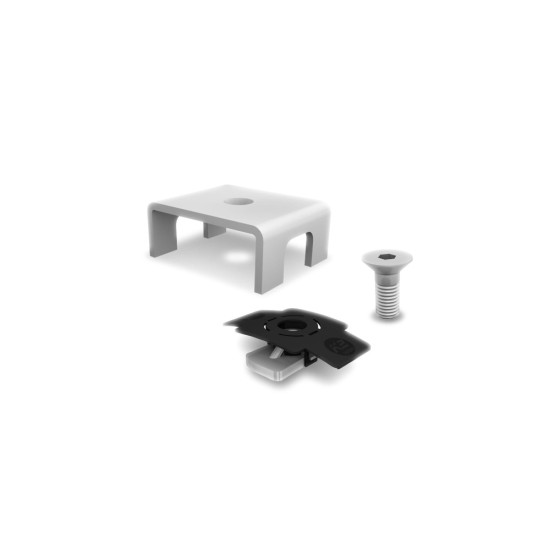
It prevents the rail from migrating on the roof: a fixed point that locks the BasicRail 22 bar and splits the expansion towards both ends. K2 BasicLock 22 set, code 1003558.
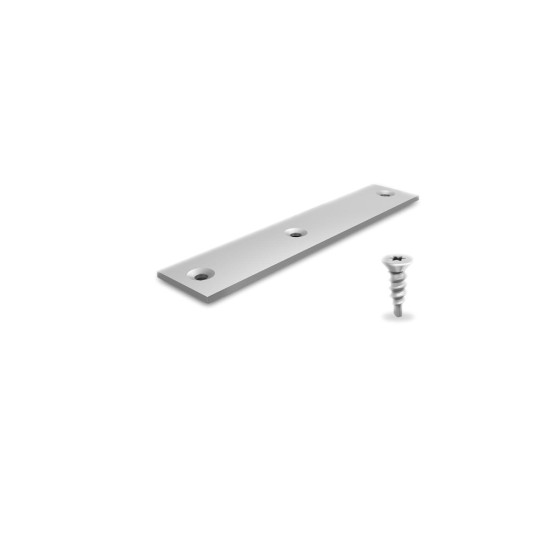
It joins two rails end to end so that you get a continuous row, without cutting bars. Aluminium and A2 stainless steel, 3 fixing holes, Torx T25 screws included.
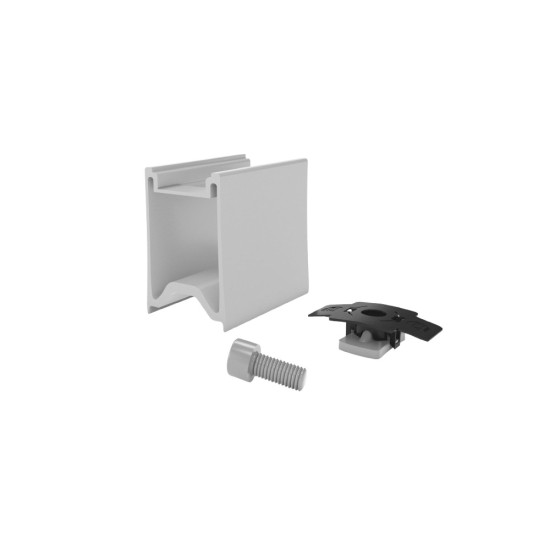
Lifts the panels off the rail so air can circulate underneath: cooler modules lose less power, and there is room for microinverters below. K2 RailUp set, code 2003191.